
Albany’s Absurd Restrictions Prevent NYC Speed Cameras From Saving Lives

As City Hall, the City Council, and street safety advocates press Albany for greater freedom to deploy automated speed enforcement in NYC, they’re asking not just for more cameras, but also for more leeway to use cameras where and when they can save lives.
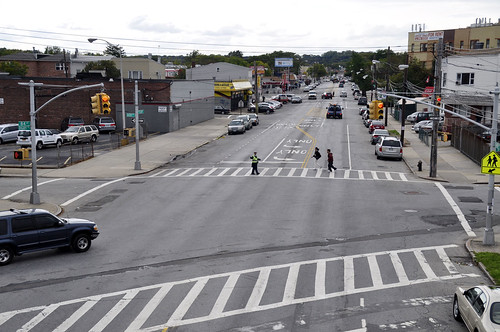
Compared to other major American cities with speed cameras, NYC’s automated speed enforcement program is strictly circumscribed, hindering the city’s ability to deter dangerous driving on streets with chronic speeding problems.
The speed enforcement program approved by Albany last year enabled only 20 cameras to operate citywide. Lawmakers also placed tight limits on when and where these cameras can operate. The cameras must be placed, for instance, within a quarter mile of a school and only on streets where schools are located.
Since NYC has 1,700 public schools and hundreds more private schools, the distance limit is less of a problem than the restrictions on which streets can have cameras. Some of most dangerous stretches of streets like Queens Boulevard or Northern Boulevard, which students have to cross to get to school, are ineligible for camera enforcement under the current rules.
The cameras are also only allowed to operate from one hour before the school day begins to one hour after school activities end, and can only ticket drivers going more than 10 mph over the limit. Fines are capped at $50.
It so happens that the hours Albany forbade cameras to operate are the most dangerous times for speeding-related traffic fatalities. According to an analysis of DMV data by Transportation Alternatives, 77 percent of fatal speeding-related crashes statewide occurred weeknights between 6 p.m. and 6 a.m. or on weekends. Three-quarters of all NYC traffic fatalities occurred during those hours, and speed was the leading factor in fatal NYC crashes, according to DMV data from 2012 [PDF].
City Council transportation chair Ydanis Rodriguez said yesterday that he wants both more cameras and fewer strings attached. “We must expand this program not only by increasing the number of speed cameras on our streets but by bolstering their ability to stop deaths and injuries. This means increased hours of operation and usage on surrounding streets,” he said in a statement. “Keeping people safe is the spirit of their implementation in the first place so it is counter-intuitive to not have them working when the majority of crashes occur.”
“It would be a real shame if we looked back a few years from now and we realized they could’ve been turned on at night,” said Transportation Alternatives general counsel Juan Martinez. “Everybody gets that we have to protect kids, but we also have to protect our parents.”
Martinez said that New York’s speed camera constraints limit their effect on deterring speeding drivers. “Let’s get a program that’s as effective as Washington, DC’s,” he said. “It’s 24 hours, seven days a week. They have more cameras than we do now in an area that’s smaller than Staten Island.” Traffic deaths in DC are falling much faster than in NYC, with a 76 percent drop since 2001.
The goal of cameras isn’t to raise revenue, Martinez said. In fact, Chicago’s 92-camera program, which has significantly fewer restrictions on how cameras can be placed, is so successful at reducing speeding that revenue is far below what that city had projected. “If we were concerned about saving lives and not about revenue, we would have a very large program,” Martinez said. “Instead, we have these artificial limitations that reduce the deterrent effect.”
Two weeks ago, Rodriguez and six other council members wrote a letter urging Governor Cuomo and legislative leaders to expand the city’s speed camera program [PDF]. The Senate budget proposal includes a nine-fold increase in the number of cameras at the request of the de Blasio administration, but does not alter the time or location restrictions. It remains to be seen if that proposal will survive budget negotiations expected to wrap up by the end of the month.


Comments Are Temporarily Disabled
Streetsblog is in the process of migrating our commenting system. During this transition, commenting is temporarily unavailable.
Once the migration is complete, you will be able to log back in and will have full access to your comment history. We appreciate your patience and look forward to having you back in the conversation soon.