
A Refresher on How PPW Bike Lane Opponents Cherrypick Their Numbers

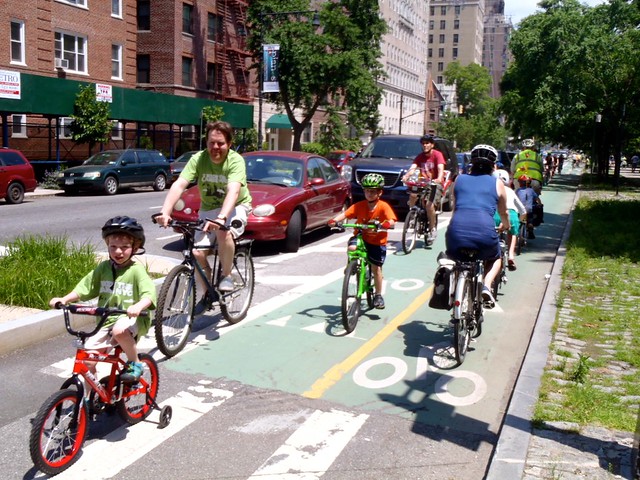
While parents and kids were out celebrating three years of safe, all-ages cycling at the Prospect Park West Family Bike Ride last week, the remnants of NBBL were apparently scouring their Rolodex for media contacts who still take them seriously.
A short item from Post columnist David Seifman notes that unidentified “critics” of the PPW redesign “insist that all of the DOT’s numbers are misleading.” That’s what Norman Steisel, Louise Hainline, and assorted other friends and acquaintances of former DOT commissioner Iris Weinshall said when they sued the city to remove the PPW bike lane. In fact, DOT’s crash numbers for PPW — which show a small reduction in pedestrian injuries and a small uptick in total motor vehicle crashes involving injury in the two years after the redesign, according to Seifman — are collected using the same methods the agency has always used to measure the impact of traffic-calming projects. It was NBBL and their lawyer, Gibson Dunn attorney Jim Walden, who cherrypicked numbers and fabricated a bogus methodology to suit their needs.
As Streetsblog reported back in 2011:
For example, when NBBL and Walden alleged that DOT counted crashes that didn’t happen on Prospect Park West, the city explains, they failed to understand how NYPD records traffic crashes at intersections. In those cases, police record one street as the “on” street and the other street as the cross street. Because most crashes occur at intersections, it is standard DOT practice to count a crash as occurring on a given street if it is listed as a “cross street” in the police report. NYPD may, for instance, record a crash that happened at the intersection of PPW and Third Street as happening “on” Third Street, with PPW as the cross street. When studying safety on the PPW corridor, DOT counts such a crash as happening on PPW, while NBBL would have disregarded such a crash, en route to compiling a dataset that doesn’t adhere to the methodology employed by DOT all over the city.
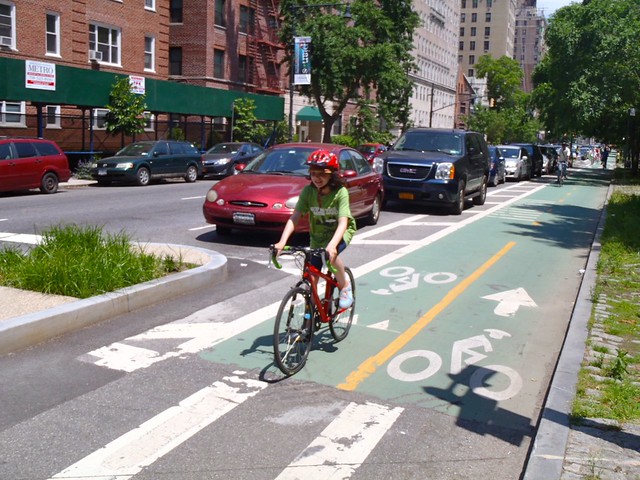
Meanwhile, with speeding down drastically compared to the old three-lane highway set-up, people feel safe using PPW in ways they never would have considered before. But the NBBL crew keeps on plodding along, spending time and energy just to undermine projects that let people do this:

Read More:
Streetsblog has migrated to a new comment system. New commenters can register directly in the comments section of any article. Returning commenters: your previous comments and display name have been preserved, but you'll need to reclaim your account by clicking "Forgot your password?" on the sign-in form, entering your email, and following the verification link to set a new password — this is required because passwords could not be carried over during the migration. For questions, contact tips@streetsblog.org.


