
Chicago Unveils Proposed Designs for Downtown BRT Corridor

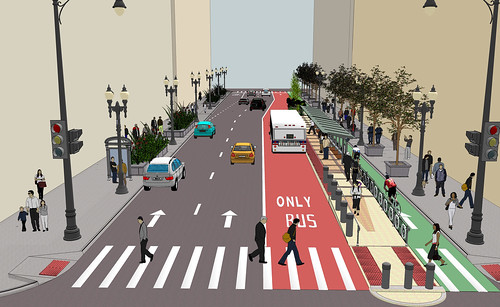
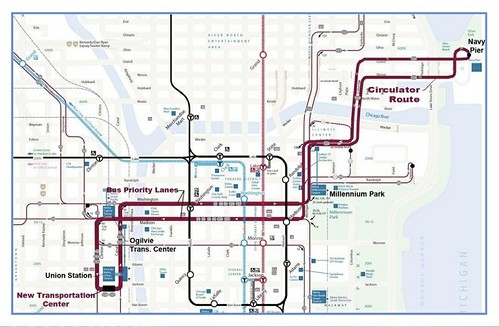
Chicago just got a step closer to first-class bus rapid transit. Today the CTA and the Chicago Department of Transportation released proposed lane configurations for the Central Loop East-West Transit Corridor, a downtown circulator route connecting Union Station with Navy Pier, as well as renderings for a new transit center next to the train station. The corridor would include bus-priority lanes on two miles of streets: Canal, Washington, Madison and Clinton. This downtown BRT service is slated to launch next year.
The Loop BRT corridor would also serve the Ogilvie Transportation Center and multiple CTA train stations with more than 1,700 buses per day, making it one of the country’s busiest bus routes, according to the agencies. The streets with bus-only lanes would incorporate red pavement marking to delineate the lanes, level boarding, queue jumps for buses at key intersections, and other features.
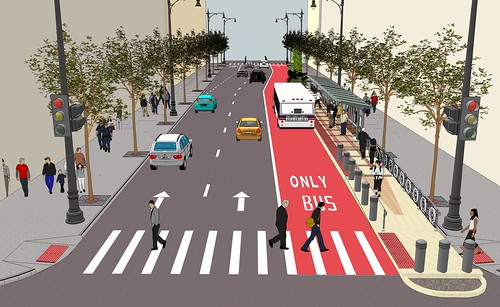
The proposed street configurations would involve converting car lanes to bus and bike lanes, which would help calm traffic on multilane Loop thoroughfares that often feel like speedways. The safety benefits of this kind of downtown “road diet” are already apparent on Dearborn, where CDOT recently changed a travel lane into a 2-way protected bike lane. Eastbound Washington would get island bus-boarding platforms and a protected bike lane to the right of the boarding area; two travel lanes will remain. Westbound Madison would have curbside boarding, two travel lanes and no bike lane, but a westbound protected bike lane would be built a block north of Washington on Randolph.
The transportation department is building and managing the Central Loop BRT project. It’s bankrolled by a $24.6 million Federal Transit Administration grant and $7.3 million in local Tax Increment Financing funding. The TIF program earmarks increases in property tax revenue within a designated TIF district for use in that district.
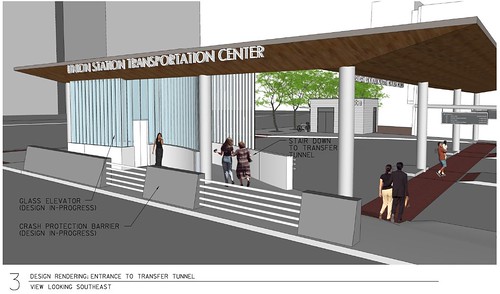
CDOT is also in the process of buying a surface parking lot on Jackson between Canal and Clinton, just south of Union Station, for the new transportation center. The facility will include a staging area for CTA buses, plus access to an underground pedway that will allow bus riders to transfer to the train station without crossing Jackson at street level.
The agencies estimate that the proposed BRT configuration could cut travel times through the Central Loop corridor by three to nine minutes per trip. The tough part is going to be convincing local merchants and average citizens that removing travel lanes for faster bus service is a smart idea – there has already been resistance to proposed BRT corridors along Ashland and/or Western from business owners.
But the plan already has the blessing of the Chicago Loop Alliance and Greater North Michigan Avenue Association chambers of commerce, and for good reason. BRT has been shown to provide an economic boost to the areas it serves. And with buses making up only four percent of vehicles traveling through the Central Loop corridor but carrying more than 47 percent of commuters making trips in vehicles, rolling out the red carpet for them with dedicated lanes is only common sense.

Read More:
Streetsblog has migrated to a new comment system. New commenters can register directly in the comments section of any article. Returning commenters: your previous comments and display name have been preserved, but you'll need to reclaim your account by clicking "Forgot your password?" on the sign-in form, entering your email, and following the verification link to set a new password — this is required because passwords could not be carried over during the migration. For questions, contact tips@streetsblog.org.


