London Mayoral Candidate: Use Congestion Charge to Lower Bus Fares

With Deputy Mayor Stephen Goldsmith hinting cryptically at future plans for congestion pricing in New York, and with public discussion of congestion pricing percolating in San Francisco, it may be timely to check back in with London’s congestion pricing system.
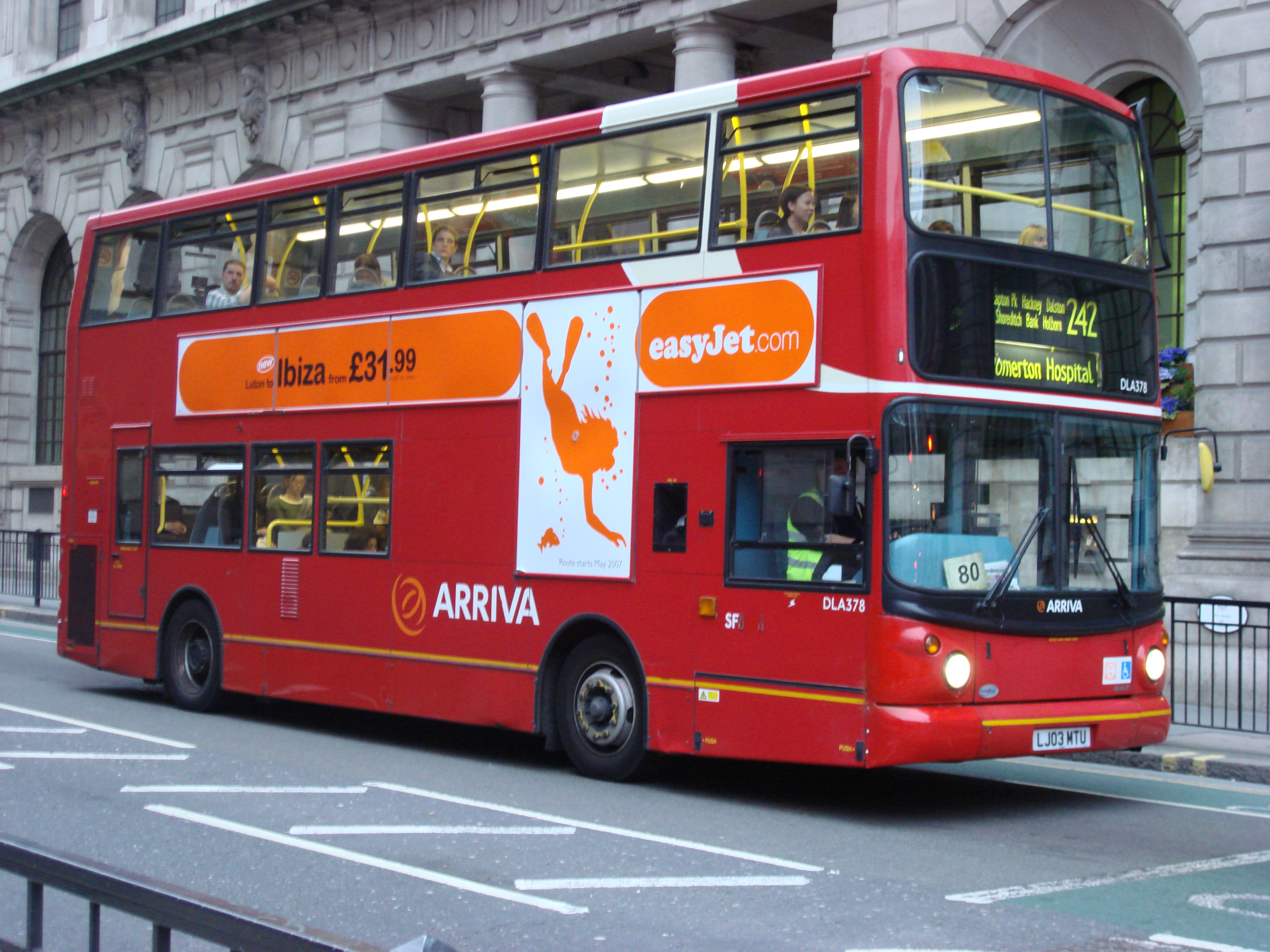
 Congestion charging has already greatly improved bus service. Will Londoners vote to use congestion fees to reduce fares, too? Photo: Wikimedia
Introduced in central London in 2003 and then extended westward in 2007, the congestion charge has curbed traffic, reduced the number of car crashes, cut emissions of greenhouse gases and air pollutants, raised nearly a billion dollars to invest in public transport, and encouraged people to travel in more sustainable ways, with increased bus ridership and cycling rates.
So the congestion charge is a fixture in the British capital. The debates today center over what shape the congestion zone should take, and what to do with the revenue. While the current mayor, Boris Johnson, is intent on shrinking the zone, one of his potential successors has raised the prospect of maintaining the current cordon and using congestion fees to reduce bus fares.
Johnson has backed the removal of the western extension, which mainly covers the Royal Borough of Kensington and Chelsea and is approximately half of the current zone, since he was a candidate. Why would the mayor want to remove such an apparently successful measure?
Whereas the original congestion charging zone, which encompassed the economic and cultural heart of the city, has enjoyed wide public and political support, the more residential western extension has always been more controversial. In particular, there have been concerns about the impact on small businesses and residents living just outside the zone who are not eligible for the 90 percent discount for residents. Johnson used the idea of eliminating the western extension during the 2008 mayoral campaign as a way of differentiating himself from the policies and management style of the incumbent, Ken Livingstone.
In online surveys, highly motivated residents have clamored for the western extension to be removed. Surveys of Londoners as a whole, however, show a more balanced view. It is expected that removing the western extension will result in small increases in congestion, CO2 and air pollutant emissions.
Johnson’s final decision is expected in the fall, with removal penciled in for December 24 this year. A series of mitigation measures have been proposed if removal goes ahead.
Even if the western extension is removed, that may not be the end of the story. Both of the Labour Party’s candidates for mayor, Livingstone and Oona King, a former member of Parliament, are expected to re-introduce the western extension if elected in 2012.
At the launch of King’s transport platform earlier this week, she even suggested that the revenues from the re-instated western extension (approximately $75 million a year) could be used to reduce bus fares. “Half of all Londoners’ journeys on public transport are by bus and it’s time we used money raised from elsewhere to start reducing fares for everyone,” King told the London Evening Standard, “especially the least wealthy who rely on this essential service to get around the capital.”
In London, travel survey data shows that buses are more likely to be used by people with lower incomes. Those who drive, meanwhile, tend to have higher incomes and are better able to absorb additional costs.
With New York’s MTA still facing a $400 million deficit, which could result
in more fare hikes and further service reductions, the need to properly
fund the city’s transit system is as strong as ever. The official proposals for road pricing here — congestion pricing and the Ravitch Commission’s bridge toll plan — haven’t been linked explicitly to holding down transit fares (although the backers of the Kheel Plan did make that connection). New York and other cities considering congestion pricing will want to keep tabs on the political fate of such a proposal in London.

Streetsblog has migrated to a new comment system. New commenters can register directly in the comments section of any article. Returning commenters: your previous comments and display name have been preserved, but you'll need to reclaim your account by clicking "Forgot your password?" on the sign-in form, entering your email, and following the verification link to set a new password — this is required because passwords could not be carried over during the migration. For questions, contact tips@streetsblog.org.